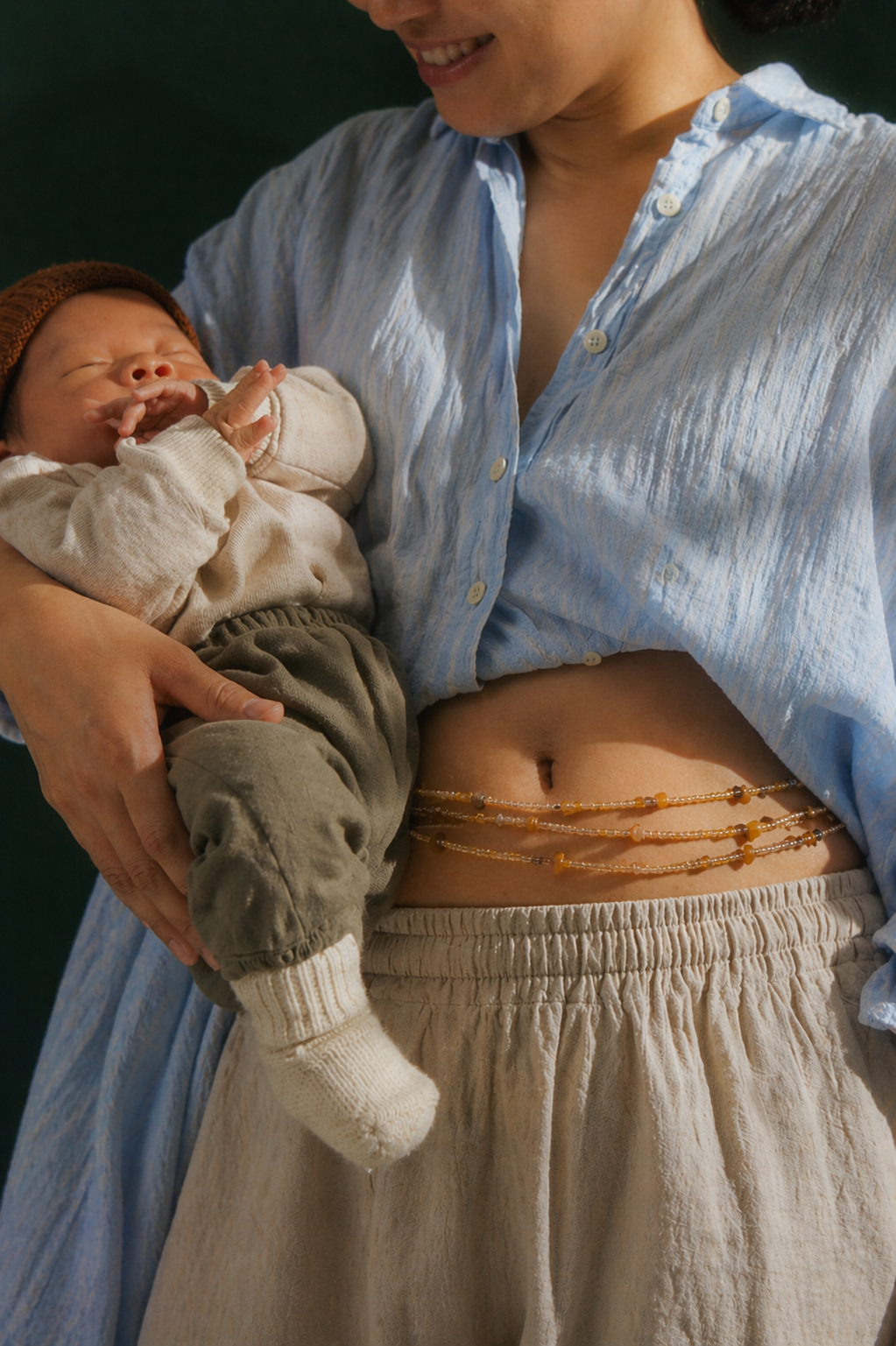
Let me ask you something, queen. When you scroll past a strand of waistbeads online, do you know whether you're looking at a piece of living tradition, or a $2 trinket flown in from a factory that has never heard the words dzondo or toma?
Most women don't. And that's not their fault. The market has been flooded with cheap, clip-on, elastic-stretch waistbeads designed for fast checkout and faster forgetting. They look the part. But they carry none of the meaning. And I think it's time we talked honestly about the difference, because your body deserves better than a knockoff of something sacred.
I'm Shida, founder of Handmade Bysanaah. I was born in Ghana and now live in the Netherlands. I've worn waistbeads my whole life, and I've watched the world wake up to them, often without ever understanding what they truly are. And I get it, tradition can sometimes feel like peer pressure from dead people. But the older I get, the more my body longs for beautiful rituals that make me feel connected, feminine, and rooted.
So consider this your invitation to slow down, look closer, and choose differently.
What Waistbeads Actually Are (And Where They Come From)
Long before waistbeads became a summer accessory paired with a bikini, they were a foundational part of a woman's life in West Africa.
In my culture, the Ewe people of Ghana and Togo, we call them dzondo or toma. Our ancestors crafted them from glass, clay, and shells, and they marked the most important moments of a woman's life:
- At birth, baby girls receive their first tiny strands during the Outdooring ceremony, when a child is formally welcomed into the world and given their name.
- Through girlhood and puberty, the beads are replaced as the body grows, celebrating each transition.
- Into womanhood and motherhood, they remain a quiet, intimate marker of identity, femininity, and milestones.
These strands have meant fertility, status, protection, and belonging for centuries. They are worn against bare skin, often hidden from the world, a secret celebration of the woman wearing them. That history is not decoration. It's the entire point.
The Quiet Power of the Tie-On
Here is where the real difference lives.
Traditional waistbeads are knotted permanently onto a cotton cord. No clasp. No elastic. No stretch. Many people assume this is a limitation, something the modern versions "improved." It isn't. It's intentional, and it changes everything about how the beads work with your body.
When you tie a strand on with your own hands, you make a small, private promise to yourself. You're not just putting on jewelry; you're setting an intention. The act is slow. It asks for a moment of presence. And then the beads stay with you, through showers, through sleep, through the ordinary days that make up a life. Because as women, we often look outside of ourselves for strength. We ask others what to do, what to choose, even what to pray for. But your body often knows what you need before you can put it into words.
So choose your waistbeads, set your intention, and tie that little promise around your own waist. And when I tie them for you? My intention is always the same: More abundance. More love. More femininity.
A kinder mirror than the scale
Because tie-on beads don't stretch, they become the gentlest body-awareness tool I know.
Eat a heavy meal or gain a little weight, and the beads sit a touch higher or feel a little snug. Lose weight, and they slip down to rest gracefully on your hips. There's no glaring number making you feel small. Your beads simply hug you and whisper, drink some water, move your body, come back to yourself.
A clasp can't do this. An elastic band stretches to hide the truth your body is telling you. The tradition was built to keep you connected, not comfortable in your disconnection.
Beads that move with you
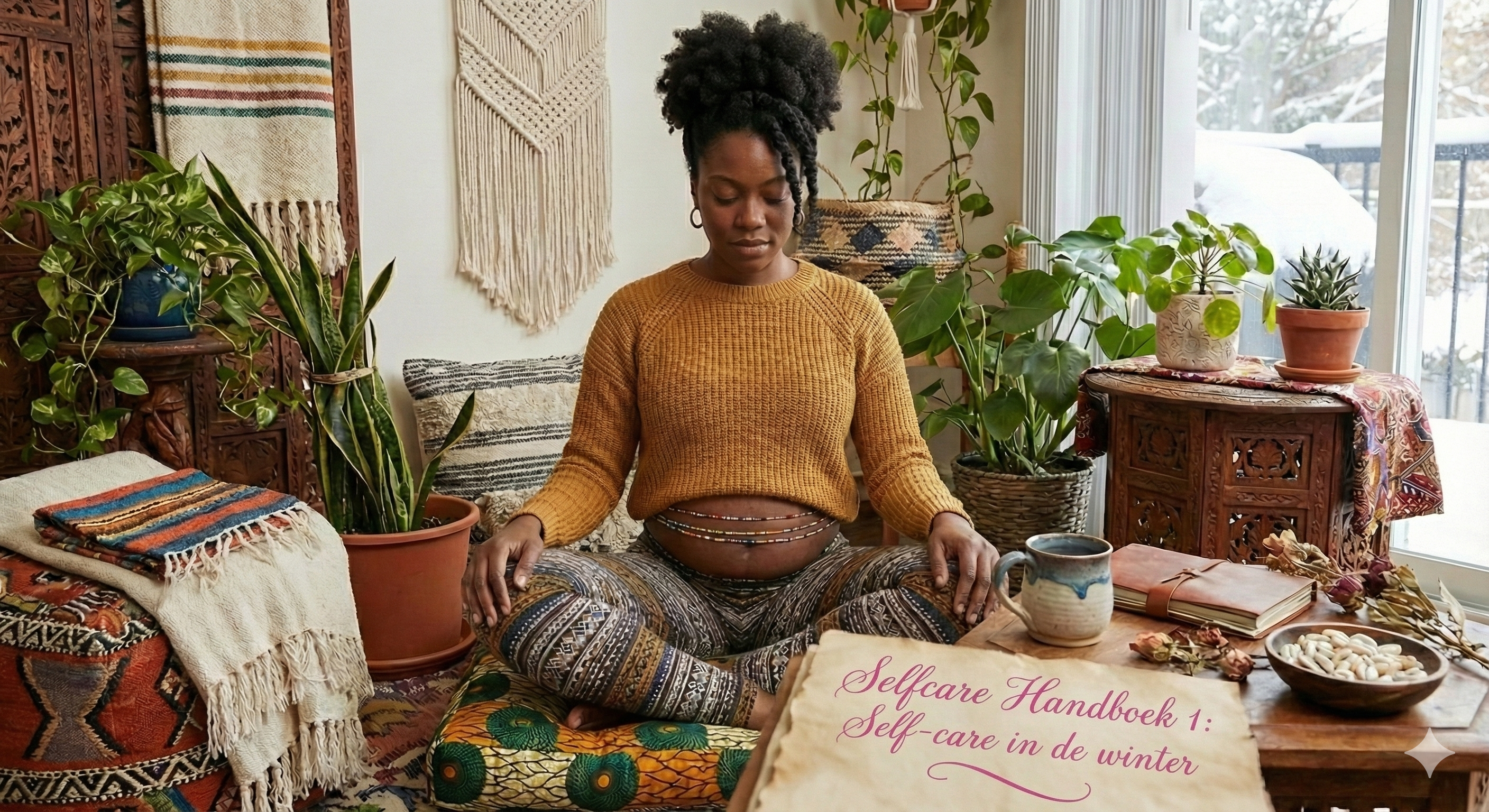
A tie-on strand becomes part of you in a way a clip-on never will. It sways when you walk. It clinks softly under your clothes. You stop noticing it consciously and start feeling it, an ongoing, intimate ritual of self-commitment that lives on your skin instead of in a drawer.
The fast-fashion problem we need to name
Walk through any large online marketplace and you'll find waistbeads sold for almost nothing, mass-produced with clasps and elastic, stripped of every cultural thread that gave them meaning.
I understand the appeal. They're cheap. They're convenient. They ship fast. But this is exactly the fast-consumption mindset that leaves so many of us feeling empty, the belief that something meaningful can be bought instantly, worn carelessly, and tossed when we're bored.
When waistbeads are reduced to a disposable trend, two things are lost:
- The women who carry the tradition. Authentic, handmade makers, many of them Black women keeping an ancestral craft alive, are drowned out by factories that have no connection to where this practice comes from.
- The meaning that makes them work. A bead has no power to ground you if it was made without intention and worn without one.
This isn't about guilt. It's about discernment. You deserve to know what you're buying, and what you're missing when you choose the knockoff.
So, Where Do You Buy Real Waistbeads?
If you want the real thing, look for these signs:
- Tie-on cotton cord, not clasps or elastic. This is the clearest marker of authentic, traditional construction.
- A maker with a story and a lineage. Authentic waistbeads come from people who can tell you why a color is chosen and what the tradition means.
- Handcrafted, made with intention. Slow beauty, not mass production.
- Support for the cultures and women who originate the craft. When you buy from a Black-owned, culturally rooted maker, your purchase honors the tradition instead of erasing it. You can buy waistbeads from www.bysanaah.com
And yes, this matters whoever you are. I'm asked all the time whether non-African women can wear waistbeads. My answer is yes, with appreciation rather than appropriation. When you understand the history, support the women who carry it, and wear your beads to honor your own body and femininity, you become part of something beautiful rather than something extractive.
A Word on Colors, Because Every Strand Tells a Story
The colors of the waistbeads from Handmade are chosen with intention:
- Gold — wealth, royalty, and worth
- Red — passion, confidence, and life force
- Blue — healing, harmony, and peace
- White — purity, truth, and fresh beginnings
- Green — fertility, nature, and prosperity
This is a language of love. A factory strand speaks none of it.
Choose yourself today
I didn't return to waistbeads because my life was perfect. I returned to them during a season of disconnect, from my body, my femininity, my own sense of home. Tying that first knot was me choosing myself again. That's what these beads have always been for.
So here is my invitation, sister. Slow down. Step away from the fast, the cheap, the disposable. Choose a strand made with hands and meaning. Tie it on yourself. Set an intention as you knot the cord, something true, something just for you.
Then go live your day knowing that under your clothes, against your skin, you carry generations of wisdom and a quiet promise to come home to yourself.
Explore handcrafted, traditional tie-on waistbeads at Handmade Bysanaah, and choose you, today. Click here!

Laat een reactie achter
Alle reacties worden gemodereerd voordat ze worden gepubliceerd.
Deze site wordt beschermd door hCaptcha en het privacybeleid en de servicevoorwaarden van hCaptcha zijn van toepassing.